

Jessica Steen, OD, FAAO, DipABO, weighs in on what the optometric community should know concerning what side effects their patients may experience.
Jessica Steen, OD, FAAO, DipABO, weighs in on what the optometric community should know concerning what side effects their patients may experience.

A summary of major FDA approvals and CRLs in eye care from the first half of 2026.
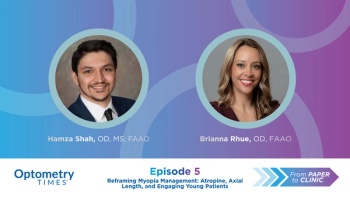
Host Hamza Shah, OD, MS, FAAO, is joined by Brianna Rhue, OD, FAAO, to discuss eye care terminology, inspired by Zhang et al's paper, "Myopia Progression Management: Current Trends and Future Directions."

An overview of the diagnosis and evidence-based management of one of the most common causes of visual acuity reduction following intraocular surgery.

In a preference study, Karl Csaky, MD, PhD and colleagues found that lesion growth rate reduction was the primary driver of GA treatment decisions among US retina specialists, with greater risk tolerance for foveal-threatening lesions.
Jessilin Quint, OD, MBA, FAAO, said that integrating AI into your practice can start small.

A large real-world cohort study by Takashi Nishida, MD, PhD et al finds OSA is associated with elevated glaucoma risk.

According to the survey, one in five sufferers reported that dry eye symptoms affect their self-confidence (22%) and emotional wellbeing (20%).
Shareen M. Greenbaum, MD, and Amanda Amberg, OD, recognize comanagement as an opportunity to target dry eye early and use advanced diagnostics and treatments for healthier ocular surfaces.
Neda Gioia, OD, CNS, FMCP, FOWNS, CFMP, details what she finds concerning and surprising in a recent study she conducted with Kaleb Abbott, OD, MS, FAAO, FOWNS.

In this podcast, retina specialist John Kitchens, MD, has a conversation with a patient about the choice he made for anti-VEGF therapy to reduce his treatment burden, then discusses recent clinical trial data on therapeutic options with extended treatment intervals.
Kaleb Abbott, OD, MS, FAAO, FOWNS, details one of his lectures during AOA's Optometry's Meeting 2026.

Jacqueline Theis, OD, FAAO, gave tips to clinicians on how to critically read studies in order to assess if they are applicable to their everyday practice.
Denise Whittam, OD, said that the Acuvue Oasys lens family holds her go-to lenses for patients for their comfortability.
Kaleb Abbott, OD, MS, FAAO, FOWNS, outlined a recent study he conducted with Neda Gioia OD, CNS, IFMCP, FOWNS, on optometry and burnout – in addition to unpublished data on job satisfaction.

Choosing the right patients for soft lenses, orthokeratology, and spectacle lenses has long-lasting effects on the vision health of those with myopia.

FDA clears Lumvoa for active and chronic thyroid eye disease, offering rapid proptosis and diplopia gains—plus key safety monitoring tips.

Canto-Sims, OD, discusses how Meta's donation of free AI glasses to blind veterans could close longstanding access gaps in low vision care.
Erin Rueff, OD, PhD, FAAO, provides an introduction to Johnson & Johnson's versatile contact lens family.
Jacqueline Theis, OD, FAAO, underscored the importance of individualizing care based on where the patient is in their MS journey.
Mark Schaeffer, OD, FAAO, stated that optometrists should be prepared for even the rarest cases of emergencies and urgencies.

ZEISS partners with Envision to expand evidence-backed VR perimetry, enabling more accessible, gamified home visual field testing for glaucoma monitoring.

The resubmission is considered a Class 1 submission and has a current PDUFA target action date of July 29, 2026.

Raman Bhakhri, OD, FAAO, outlines the biomarkers that optometrists should keep in their wheelhouse when examining patients.
Melody Tavakoli, OD, stated that patient complicance remains one of the biggest challenges for contact lens wearers.

Clinical trial data support the Deseyne contact lens, the first FDA-designated EDOF soft contact lens, as a new daily disposable option for presbyopia.
Lori-Ann Christie, PhD, detailed a poster presentation titled "Comparative Analysis of AREDS2 and AREDS2+B Vitamin Complex in an in vitro Model of Age-Related Macular Degeneration."
Will eye drops be an option in the future for keratoconic patients? Clark Chang, OD, MSA, MSc, FAAO, gave us the run-down of what active research may make possible.
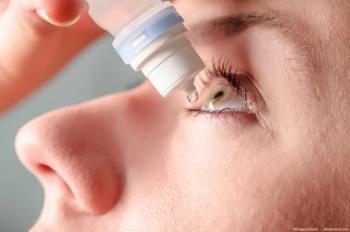
Preservative-free bimatoprost gel now offers once-daily glaucoma and ocular hypertension IOP reduction, aiming to boost comfort, tolerability, and long-term adherence.
Mile Brujic, OD, FAAO, stated in a poster presentation that a multi-practice study found that the lens had particularly positive effects on patients who reported dryness symptoms.